
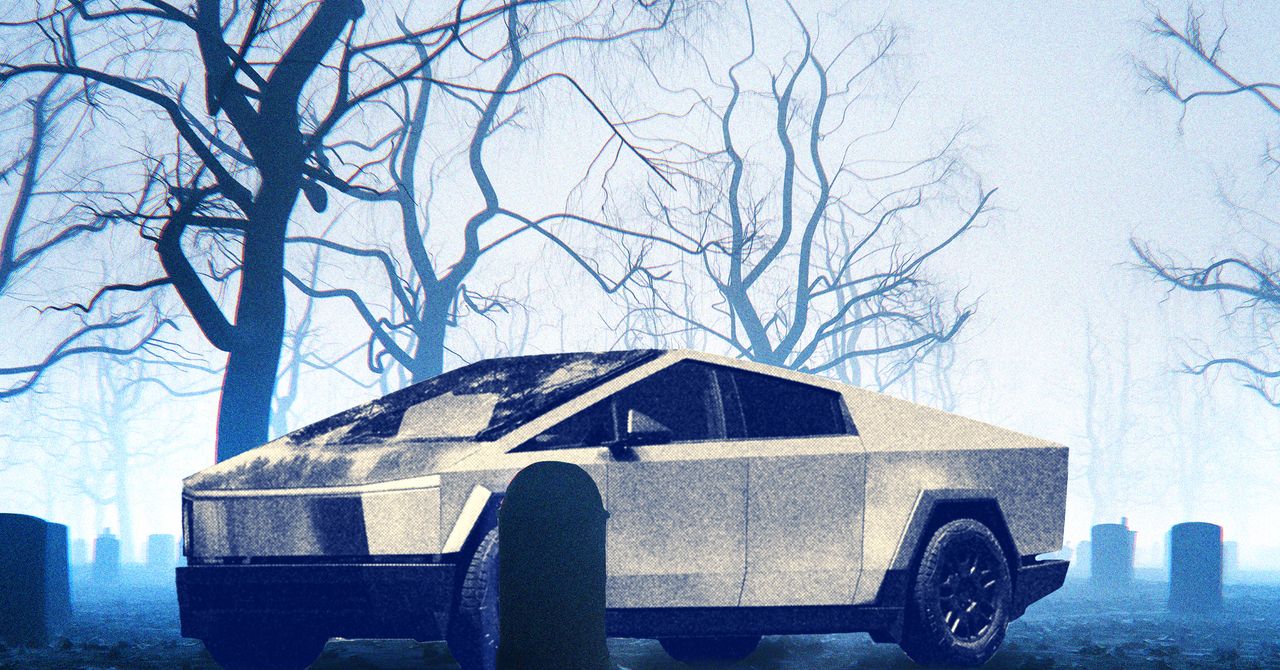
Last week, Elon Musk announced on X that Tesla would halt production of the Cybertruck at Gigafactory Texas “around the middle of next year,” supposedly to allow for increased production of self-driving Cybercabs.
Automotive industry observers were quick to surmise that the vehicle’s weak sales, delayed deliveries, inflated pricing, numerous recalls, and connection to Musk’s far-right MAGA politics may also have factored into the decision. Longtime detractors of the polarizing steel-paneled truck, originally positioned as an electric rival to classic gas-powered pickups, jeered Musk and Tesla fans over its demise, noting with some pleasure that the Cybertruck would exit the market within four years of its November 2023 rollout.
And, in Cybertruck fan communities across the web, owners began to mourn.
“Worst possible news,” a member of the Cybertruck Owners Club forum wrote in a response to Musk’s post. “No chance to buy another in future years for a newer model or after a car accident. No more aftermarket mods. No more service or parts.” Another remarked that they had waited for their truck “longer than the truck line was around.”
“So everybody in my group, they are not happy,” Michael Goldman, a contractor in Palm Springs, California, tells WIRED. As the administrator of the Facebook group Cybertruck Owners Only, which has more than 82,000 members, he’s been swamped with frantic messages. “I’ve had people reaching out to me through the group, asking me, like, ‘What are you going to do?’” Goldman says. “And I’m like, ‘Dude, I don’t know.’”
Since hearing the news about the discontinuation of the truck, many owners have expressed feelings of betrayal and disappointment. Some are wondering if their pending orders will be fulfilled, as Musk has claimed that Tesla “will have to return deposits for a lot of people” due to demand outpacing production. Others have looked for a silver lining, speculating that the Cybertruck could become a valued collector’s item.
But Goldman doesn’t want to turn his truck into a “garage princess,” since he enjoys driving it and finds it useful in his construction business. “I don’t want to ever drive another truck,” he says, and he considered buying a backup Cybertruck for when his first one reaches the end of its life. “I’ll be honest with you, I was going pull the trigger on a [Cyberbeast] about two days ago, and I have a reservation already in my phone,” Goldman says, but when he was ready to complete the purchase, “the price increased like another $8,000 or something, and that was my sign to not do it.”
That Musk, against all odds, actually brought his vision of the Cybertruck to life makes it all the more painful for Goldman to see it scrapped. “That it actually happened and only happened for such a short period of time kind of blows me away,” he says. “That’s why I want to call him out on it, you know?”
Troy Meekhof, a Tesla aficionado in Grand Rapids, Michigan, known as “the Cybertruck Guy” on social media, has not been shy about expressing his own displeasure. “I can’t help but think this is Tesla’s own unwillingness (or incompetence) to make Cybertruck a success,” he posted in reply to Musk’s announcement of the wind-down last week. “Where was the price cuts? Where were the advertisements? Where is range extender?”
“I absolutely do think this is the wrong move for the Tesla brand, and it’s not necessarily because of the removal of an under-performing product, but it’s a clear symbol of Tesla’s aggression towards transitioning to autonomous vehicles only,” such as the two-seater Cybercab, Meekhof tells WIRED in an email. “If you ask me, it is far too aggressive, and I have a growing conviction that, at least in America, the population and legislators are not ready nor interested in autonomous vehicles today en masse.”